
Don't make it too easy!

Hello Awesome Human,
There are three stages to recovery from an eating disorder:
Restore regular eating.
Improve self-esteem - create independence.
Develop healthy coping strategies, including restoring healthy relationships.
This email is about stage two.
When our daughter was unwell with an eating disorder ED, I was an overprotective mother. I held her close, advocated for her, tried to make things as easy as possible for her and was determined that I would help her recover.
Unfortunately, making things easy for our kids isn’t necessarily the best way to help them. It hit me right in the face…ouch! When I read the passage below in Brené Browns Dare to Lead.
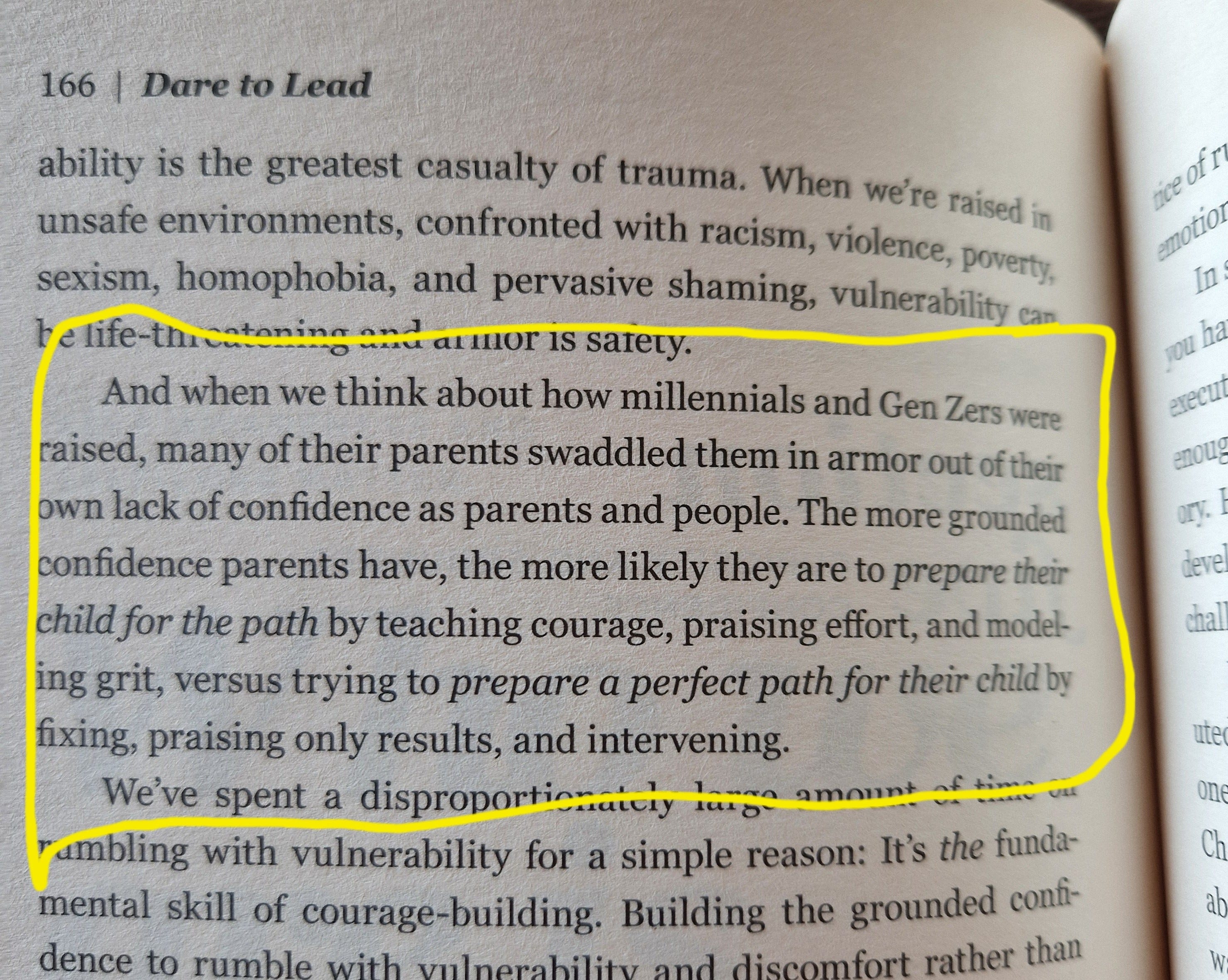
Even before our daughter had an eating disorder, I was so set on our kids having a great life that I tried to make things easy for them. I helped them out when they got stuck, and if there were an opportunity for me to help, I would take it. I now understand how unhelpful this can be. When we do something for someone, they don’t get the opportunity to test their abilities.
I was attempting a pull-up with a PT today, and initially, she was giving me a hand up. It wasn’t until she let go that I was able to see what I was capable of and what I needed to do to improve. I got way more confidence when she let go than when she was helping me, even though I didn’t get as high in the air.
Doing stuff ourselves builds self-esteem. It shows us we are capable and have value. We need autonomy to grow.
This isn’t just about behaviours; it works for emotions too. I have talked about the reassurance trap before. Our daughter would frequently ask for reassurance about the impact of what she had to eat or how she looked. When I gave it to her, it brought a microdose of relief, but she would later be more stressed and asked again. Research shows us that if we can redirect our loved one to their resources, ‘I know this feels stressful, but you can get through this’, or ‘You know the answer as you asked me yesterday’ will, in the short term, increase the anxiety felt. However, when the person discovers that they did cope on their own and get through those moments of feeling like that, their anxiety won’t be as high next time. Over time, they become more able to cope with these moments of high anxiety, and there is a fall in the stress it induces.
How can we give our children more autonomy?
You might need to start with tiny steps, for instance, where they can have more choice. It might be between two possible snacks, the timing or place of a meal, or it might be about how they get back to activities they were previously doing.
This brings me to risk-taking. If we want our loved one to recover, they need to test the boundaries of what they can do. They need to be able to do the things that matter to them. If we hold them too close and keep them too safe, they will remain limited in their recovery. We need to allow reasonable risk to take place.
This may be returning to a sport they love, going away to a festival for a few days, heading off to University or starting a job. All of these things may feel scary to us as parents, and I know every cell in my body just wanted to keep our daughter safe, but safety isn’t a life; safety isn’t the route to recovery. What we need is reasonable risk.
How do we assess reasonable risk?
Though you may not write it down, you probably do a pros and cons list in your head. The thing I used to forget was the cons of not taking the risk, not allowing our daughter to stretch and see what she is capable of. Below is an example of how you might think about it more fully.
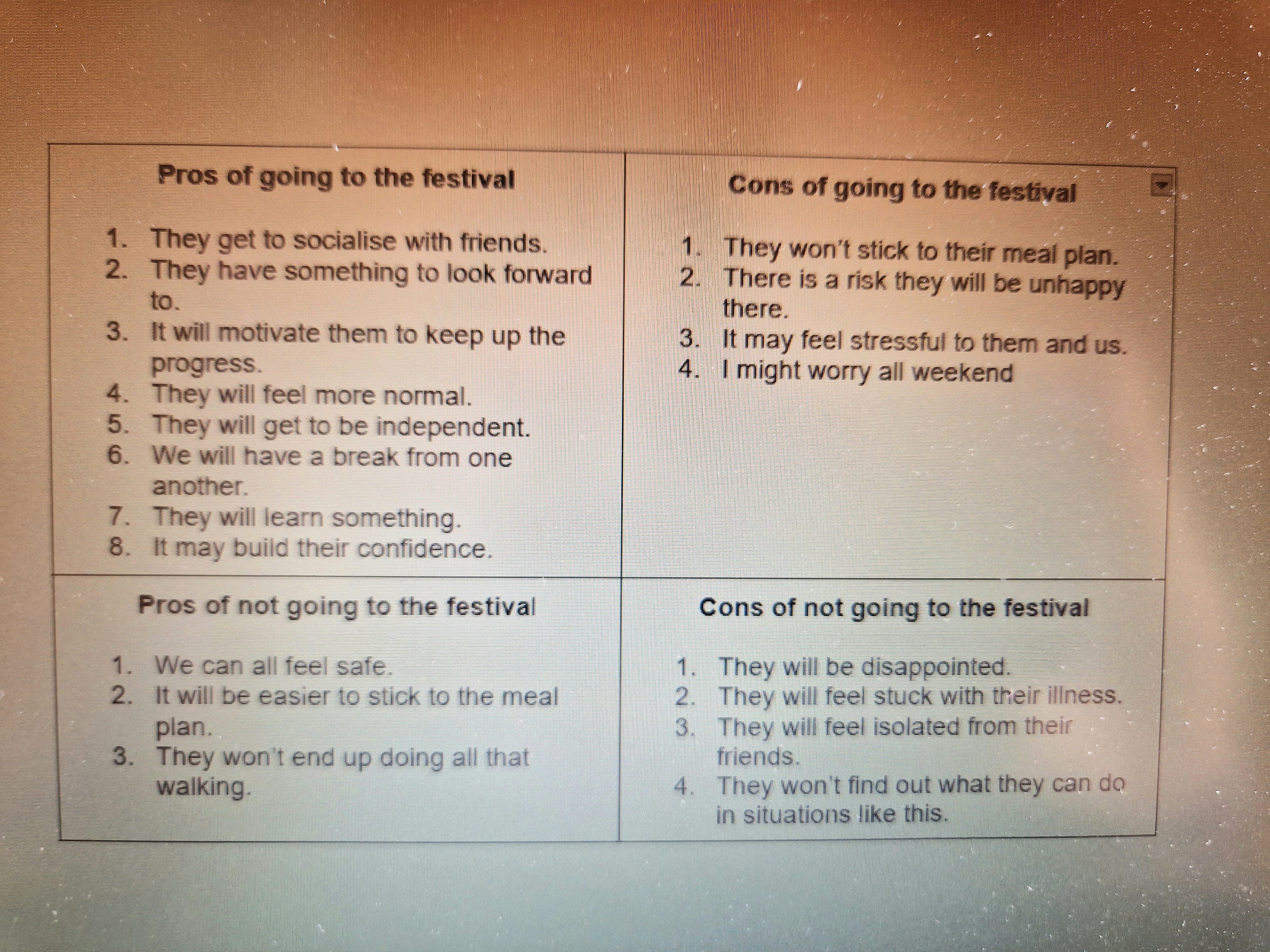
We do have a duty of care, and the risk needs to be reasonable. We don’t want to put our loved ones in a life-threatening situation. But it is good for them and us to take a risk with what they can achieve.
Now that both our children are adults, I see the things they have got most out of are the places they have had space to stretch themselves. They reap far more reward from the things they do for themselves than from the things we have done for them. It is entirely normal to want to protect our children. When they are ill, it can make us even more sensitive to this. We help them most when we can let them take calculated risks and push themselves towards the things they want for their life. Letting our children grow and recover requires us to be brave, too. I know it’s hard. I see you, and I have been there. If you want a hand with this kind of challenge, then send me a message. If you have a story to tell about how you have navigated this, then please share in the comments.
Sending you so much love,
Ruth xxx
You can work with me in several ways:
One-to-one, either online or face-to-face (near Cardiff, UK)
The Recovery Cwtch is a weekly online support group for parents who have a child with an eating disorder.
I run The New Maudsley Skills-Based Training: Caring for a Loved One with an Eating Disorder. Please message me to find out when the next one is.
Would you like more awareness of eating disorders in a school or your workplace in the UK? Contact me to discuss how I can help.
Would you like your school, university, or youth club to run an eating disorder prevention programme (The Body Project) for its young people? If so, please get in touch.
To discuss any of the above, book a free find-out call with me